Building an AI Community at Cambridge: My Journey as a Claude Ambassador
When I first joined the Claude Ambassador programme at the University of Cambridge, I had a simple goal: make advanced AI tools feel approachable and accessible to everyone — not just Computer Scientists.
Over the past two academic terms, that goal evolved into something much bigger than I initially imagined.
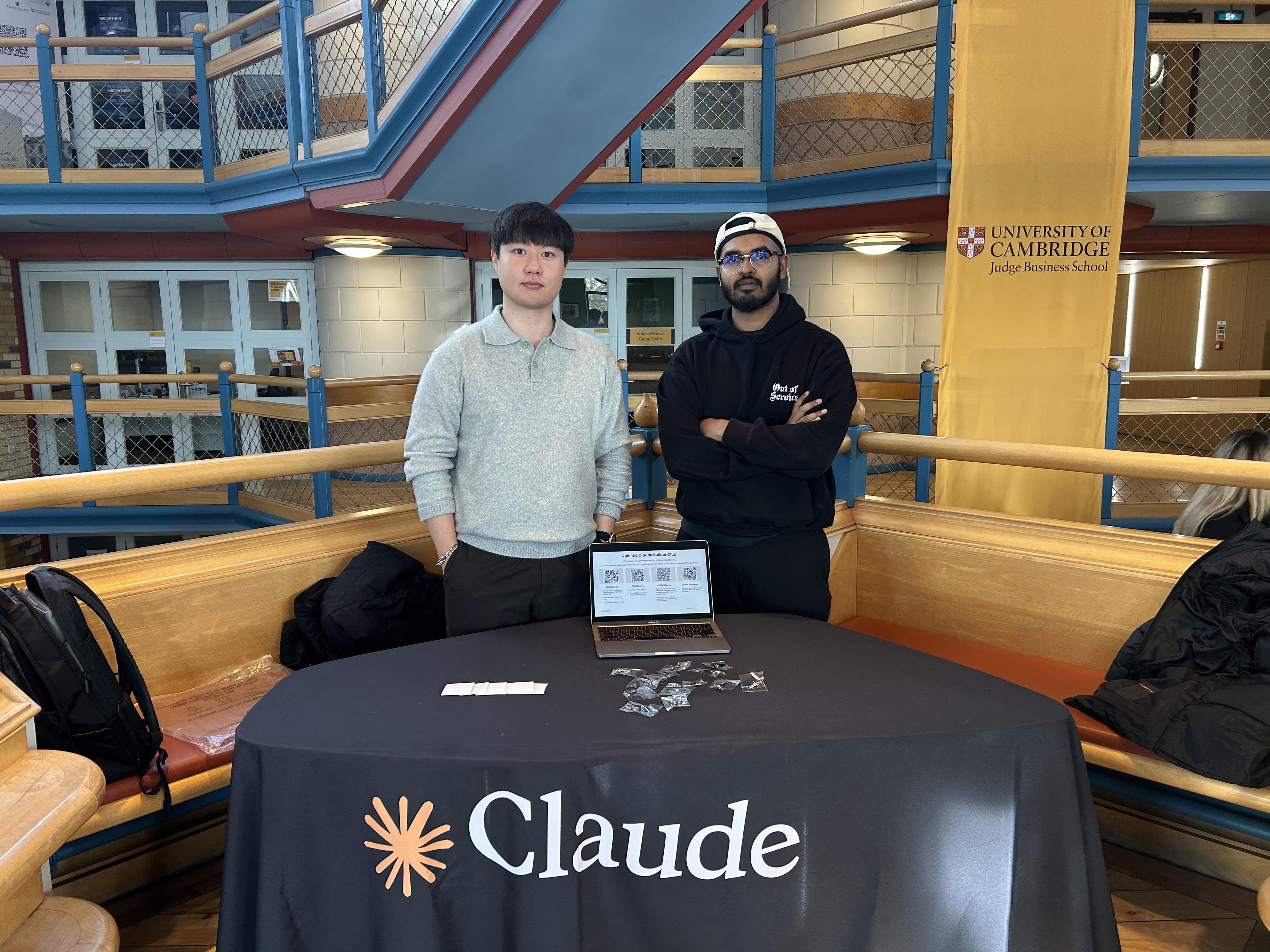
What started as a small initiative quickly grew into a vibrant community of students, researchers, and builders eager to explore the future of AI together. Across the year, we organised more than 10 workshops, hosted 2 hackathons, and welcomed over 350 sign-ups from students across a wide range of disciplines.
More importantly, we created a space where people felt empowered to experiment, build, and learn.
Creating Hands-On AI Experiences
One thing I wanted to avoid from the beginning was making the programme feel overly theoretical. AI is best understood by building with it directly.
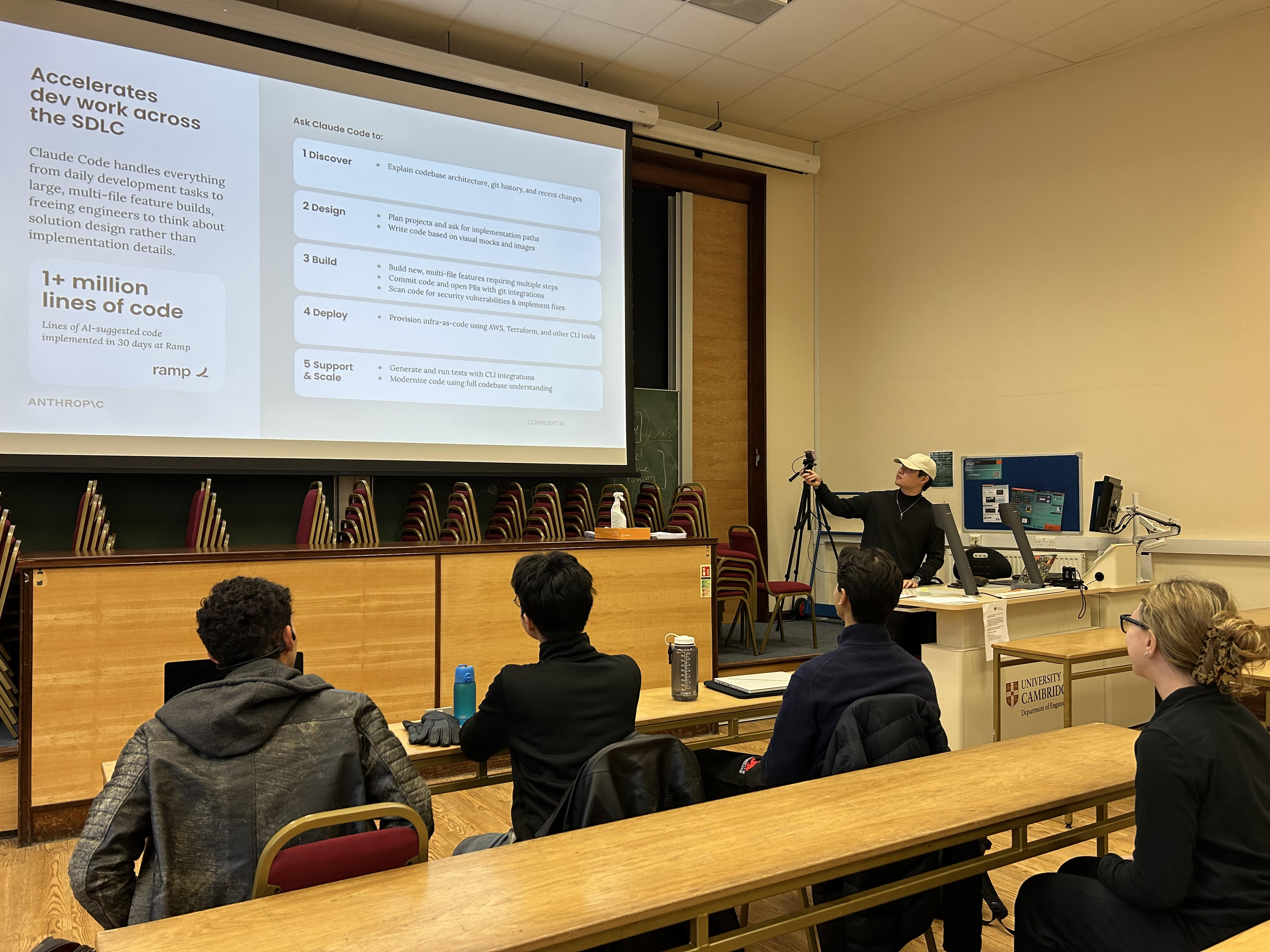
Our workshops focused heavily on practical, hands-on learning experiences. We explored topics such as AI Agents, the Model Context Protocol (MCP), MCP application development, and building workflows using Claude Code.
Rather than traditional lecture-style sessions, the workshops encouraged participants to actively prototype ideas, test tools, and collaborate with others. The goal was not just to explain how modern AI systems work, but to help people gain confidence using them to solve real problems.
Seeing students from different academic backgrounds engage with these technologies was one of the most rewarding parts of the experience.
The Hackathons
The highlight of the programme was undoubtedly the hackathons.
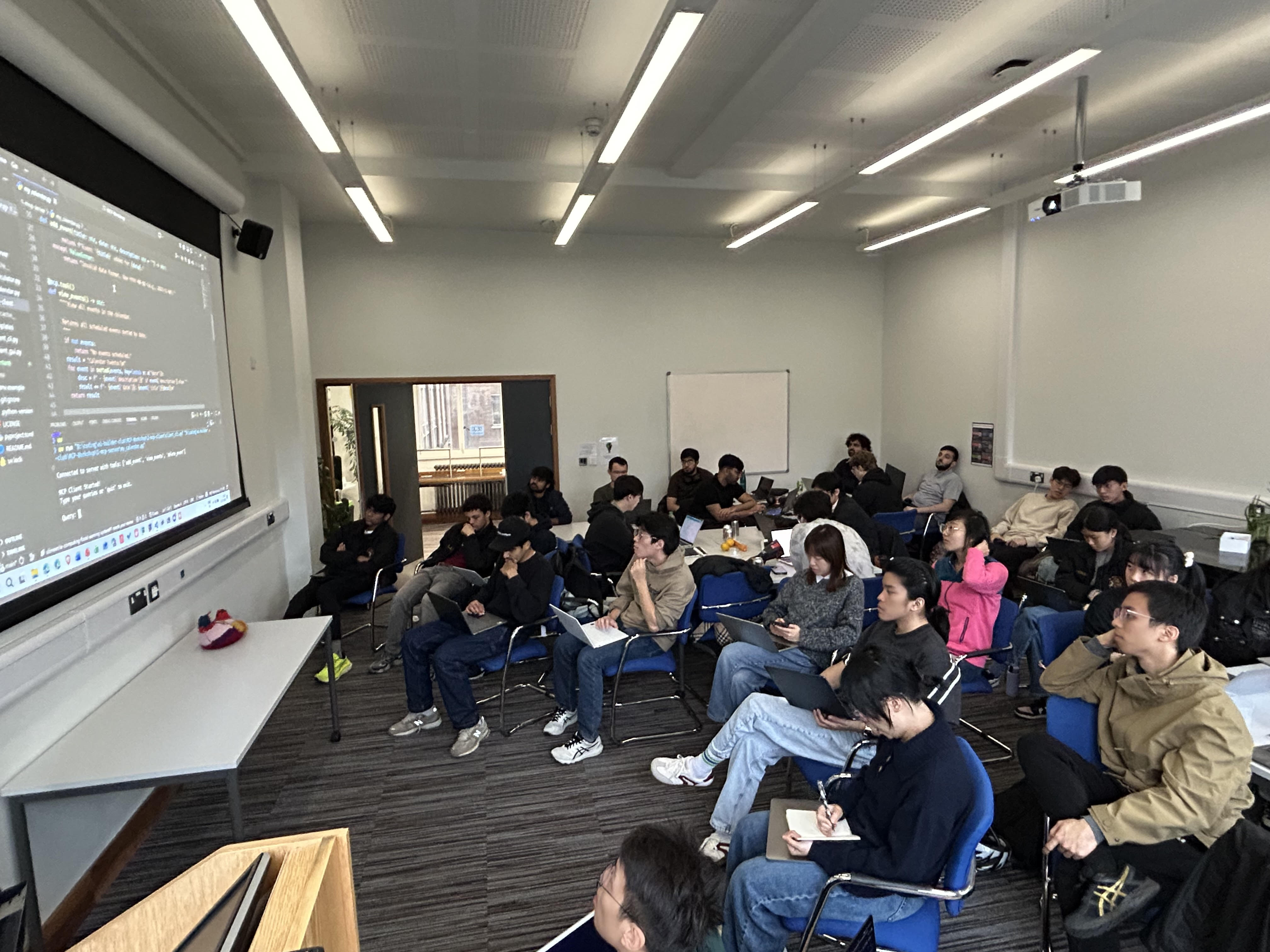
Our first hackathon focused on building applications powered by Claude AI Agents. Participants experimented with autonomous workflows, multi-step reasoning systems, and creative AI-powered products. The quality of ideas and technical execution exceeded all expectations.
For the second hackathon, we raised the challenge even further: build a complete end-to-end product with meaningful social impact in just 8 hours.
The atmosphere throughout the event was incredible. Teams rapidly moved from brainstorming ideas to deploying fully functional prototypes within a single day. What stood out most was not only the technical ambition of the projects, but also the diversity of participants contributing to them.
Breaking Down the Barrier to Building
One of the most memorable moments for me came from observing who was able to build with these tools.
A 9-year-old participant created their own application using Claude Code.
A humanities student with no formal Computer Science background successfully built and deployed an AI-powered game.
Experiences like these reinforced something I strongly believe about modern AI tooling: the barrier to creating software is changing rapidly.
Today, building impactful technology increasingly depends less on traditional technical backgrounds alone and more on curiosity, creativity, and the willingness to experiment. AI tools are lowering the friction between ideas and execution, allowing more people than ever to participate in building technology.
That shift is incredibly exciting to witness firsthand.
Looking Ahead
Although my formal contract with Anthropic is coming to an end, this experience has only strengthened my interest in the future of AI communities, developer education, and emerging technologies.
I’m also excited to begin a new chapter as an Arm Ambassador, where I’ll explore the intersection of AI and hardware acceleration. As AI systems continue to scale globally, efficient computing infrastructure and semiconductor innovation will become increasingly important topics.
I’m particularly interested in how advances in hardware can enable more sustainable, accessible, and energy-efficient AI systems — and how software and hardware communities can collaborate more closely moving forward.
Looking back, the most valuable part of this journey was never just the workshops or the events themselves. It was seeing people realise that they were capable of building things they previously thought were out of reach.
And I believe this is only the beginning.
Final Thoughts
The pace of progress in AI can sometimes feel overwhelming, but one thing gives me confidence about the future: communities.
When people are given access to the right tools, guidance, and opportunities to collaborate, incredible things happen. I’m grateful to everyone who participated in the workshops, hackathons, and discussions throughout the year, and I’m excited to continue building and contributing to this space in the future.